Xanthan gum is currently considered the most superior bio-gum internationally, combining thickening, suspending, emulsifying, and stabilizing properties. The amount of pyruvate groups at the ends of the xanthan gum molecular side chains significantly affects its performance. While possessing the general properties of long-chain polymers, xanthan gum contains more functional groups than typical polymers, exhibiting unique properties under specific conditions. Its conformation in aqueous solutions is diverse, displaying different characteristics under different conditions.
1. Suspension and Emulsifying Properties: Xanthan gum exhibits excellent suspension properties for insoluble solids and oil droplets. Xanthan gum sol molecules can form super-bound, ribbon-like helical copolymers, constituting a fragile, gel-like network structure. Therefore, it can support the morphology of solid particles, droplets, and bubbles, exhibiting strong emulsifying stabilizing effects and high suspension capacity.
2. Good Water Solubility: Xanthan gum dissolves rapidly in water, exhibiting excellent water solubility. It dissolves even in cold water, eliminating complex processing steps and making it convenient to use. However, due to its strong hydrophilicity, if added directly to water without sufficient stirring, the outer layer will absorb water and swell into a gel-like mass, preventing water from penetrating the inner layer and thus affecting its effectiveness. Therefore, proper use is essential. Xanthan gum powder, or a mixture of xanthan gum powder and dry powdered additives such as salt or sugar, should be slowly added to water while stirring to create a solution.
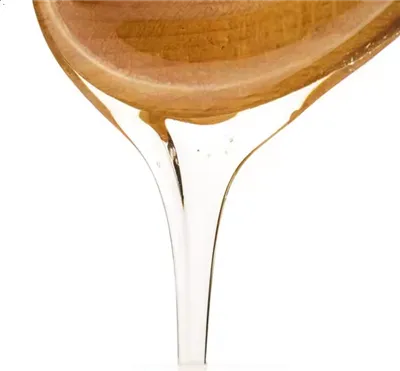
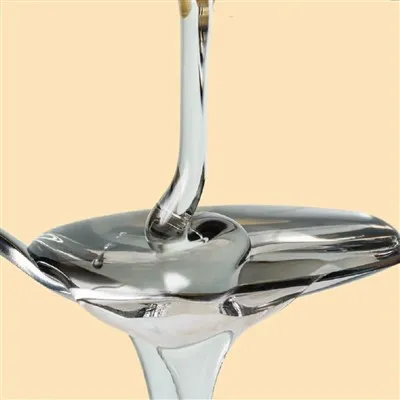
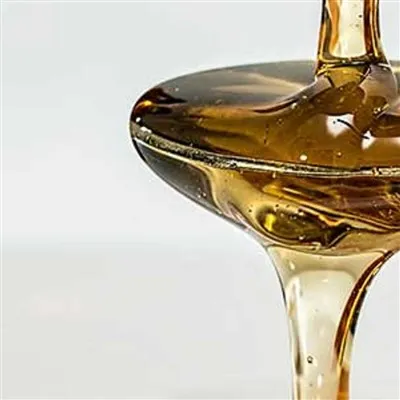
3. Thickening Properties: Xanthan gum solution exhibits high viscosity at low concentrations (a 1% aqueous solution has a viscosity equivalent to 100 times that of gelatin), making it a highly effective thickener.
4. Pseudoplasticity: Xanthan gum aqueous solutions have high viscosity under static or low shear conditions. Under high shear conditions, the viscosity decreases sharply, but the molecular structure remains unchanged. When the shear force is removed, the original viscosity is immediately restored. The relationship between shear force and viscosity is completely plastic. Xanthan gum exhibits very prominent pseudoplasticity, which is extremely effective in stabilizing suspensions and emulsions.
5. Thermal Stability: The viscosity of xanthan gum solution does not change significantly with temperature. While most polysaccharides experience viscosity changes upon heating, the viscosity of xanthan gum aqueous solutions remains almost unchanged between 10-80℃. Even low-concentration aqueous solutions exhibit stable high viscosity over a wide temperature range. A 1% xanthan gum solution (containing 1% potassium chloride) heated from 25℃ to 120℃ shows only a 3% decrease in viscosity.
6. Acid and Alkali Stability: Xanthan gum solution is highly stable to acids and alkalis. Its viscosity is unaffected between pH 5-10, with slight changes at pH values below 4 and above 11. Within the pH range of 3-11, the difference between the maximum and minimum viscosity is less than 10%. Xanthan gum is soluble in various acid solutions, such as 5% sulfuric acid, 5% nitric acid, 5% acetic acid, 10% hydrochloric acid, and 25% phosphoric acid. These xanthan gum acid solutions are quite stable at room temperature, and their properties remain unchanged even after several months. Xanthan gum is also soluble in sodium hydroxide solution and has thickening properties. The resulting solution is very stable at room temperature. Xanthan gum can be degraded by strong oxidizing agents, such as perchloric acid and persulfate, and the degradation accelerates with increasing temperature.